When picking a good sober living home, you’ll want to prioritize three key factors. First, look for affiliation with established networks like NARR or Oxford House, which require documented quality standards. Second, verify the home has clear written rules, random drug testing, and a minimum 90-day stay requirement. Third, evaluate safety standards and house size homes with 8-14 beds typically offer better oversight and longer average stays. Understanding each factor will help you make a confident decision.
Look for Affiliation With Established Recovery Networks and Treatment Programs

When you’re searching for a sober living home, one of the most reliable indicators of quality is whether the residence belongs to an established recovery network or organization. Homes affiliated with groups like NARR, Oxford House, or the Sober Living Network must meet documented standards for safety, ethics, and operations. Research shows these networked residences achieve higher abstinence and employment rates than stand-alone homes.
You’ll also benefit from choosing a residence linked to treatment programs. This connection supports continuous clinical engagement, giving you access to mental health services, medical care, and medication management. Affiliated homes undergo quality assurance monitoring and function within recovery-oriented care systems. These partnerships reduce gaps between treatment levels and strengthen your path toward lasting stability. Additionally, homes with parole/probation referral agreements are associated with lower arrest rates and greater employment outcomes for residents. This matters because nearly one-third of people entering addiction treatment report unstable living situations, making structured housing connections essential for successful recovery.
Verify Clear House Rules, Drug Testing Policies, and Minimum Length of Stay Requirements
Before you commit to any sober living home, ask to see the written house rules and policies that govern daily life. Strong program accountability depends on transparent expectations around sobriety, curfews, and financial responsibilities. You’ll want confirmation that random drug testing applies equally to everyone and that written policy enforcement uses graduated responses rather than arbitrary decisions. A facility with strong structure will also require residents to participate in house chores like cleaning or preparing meals as part of their daily responsibilities. Quality sober living homes maintain zero tolerance for drug or alcohol possession or use on the premises, which serves as the foundation of a safe recovery environment.
| Policy Area | What to Look For | Red Flag |
|---|---|---|
| House Rules | Written document covering conduct, curfews, chores | Verbal-only or vague expectations |
| Drug Testing | Random screens with documented procedures | No testing or inconsistent application |
| Minimum Stay | 90+ days recommended with phase structure | No minimum or accountability timeline |
| Violations | Graduated sanctions before discharge | Immediate eviction for minor issues |
| Documentation | Resident records maintained | No written tracking system |
Evaluate Safety Standards, Physical Environment, and Appropriate House Size
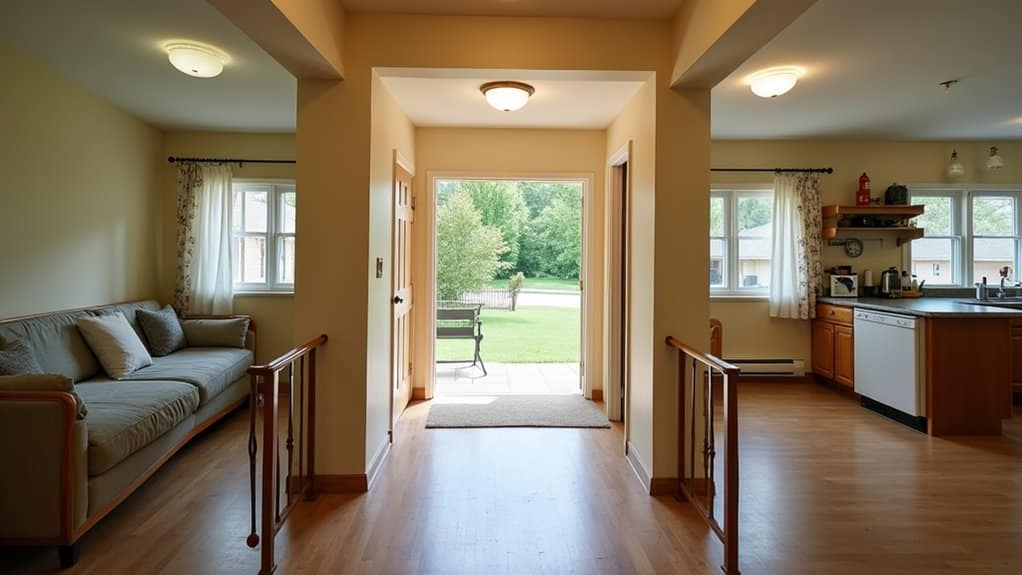
Clear rules and accountability measures set the foundation, but the physical safety of your living environment matters just as much for sustained recovery.
When evaluating homes, look for strong residency oversight and proven recovery metrics. Research shows certified facilities in communities like Delray Beach reduced overdoses by 60% within one year. Quality homes also conduct random drug and alcohol testing to maintain a substance-free environment for all residents.
Consider these key factors:
- Affiliation matters: Homes connected to larger organizations demonstrate better abstinence rates and recovery outcomes.
- Size impacts success: Look for homes with 8-14 beds, as smaller, structured environments support longer stays averaging 166-254 days.
- Location counts: Proximity to 12-step meetings, peer support, and healthcare resources directly influences your progress.
- Visitor policies protect you: Standardized guest rules reduced violations by 30% in monitored facilities.
Quality sober living programs often use phased residency structures, starting with more supervision in the initial 30-90 days before residents earn increased autonomy.
You deserve an environment designed for healing.
Frequently Asked Questions
How Much Should I Expect to Pay Monthly for Quality Sober Living?
You can expect to pay between $500 and $2,500 monthly for quality sober living, depending on your location and room type. Reasonable rent rates for shared rooms typically fall between $450 and $900, while private rooms cost more. Monthly program fees often include utilities, drug testing, and house meetings. Don’t hesitate to ask about scholarships or sliding-scale options many homes want to make recovery accessible regardless of your financial situation.
Are Male-Only or Co-Ed Sober Living Homes More Effective for Recovery?
Research shows male-only homes often predict better substance use outcomes due to gender separation creating a safer space for emotional vulnerability. However, co-ed facilities achieve comparable success rates when strong support systems exist. Your best choice depends on your personal triggers and recovery needs. Consider whether you’d benefit more from same-gender peer bonding or developing healthy mixed-gender relationships. Prioritize homes emphasizing community engagement regardless of their gender composition.
What 12-Step Meeting Attendance Requirements Should a Good Sober Home Have?
A good sober home should have regular attendance requirements of 3 5 outside 12-step meetings weekly, with daily attendance during your first 30 90 days. You’ll want a home that tracks attendance through signed meeting cards and requires you to maintain a sponsor. Look for programs that balance recovery focused activities with other structured programming. Strong homes won’t count house meetings toward your outside meeting minimums, ensuring you’re connected to the broader recovery community.
Should the Sober Living Home Have an Onsite House Manager?
Yes, you should look for a sober living home with an onsite house manager. Research shows 83% of effective recovery homes have on site supervision, with managers spending around 60 hours weekly at the facility. This active staff engagement means someone’s available to address your needs promptly, enforce house rules consistently, and provide emotional support when you’re struggling. You’ll benefit from immediate oversight that creates the stable, safe environment essential for your recovery journey.
What Happens if a Resident Relapses While Living in the Home?
If you relapse while living in a sober home, you’ll face resident disciplinary procedures that vary by facility. Some homes offer temporary suspension with a path back after clean testing, while others may require immediate departure. Research shows relapse rates of 40-60% mirror chronic illnesses, so quality homes incorporate relapse prevention strategies rather than simply punishing you. Your honest disclosure typically gives you the best chance of continuing your recovery journey there.